Academic · Note #03
Enneal LIMS
From sample to publication, with FAIR and DOI
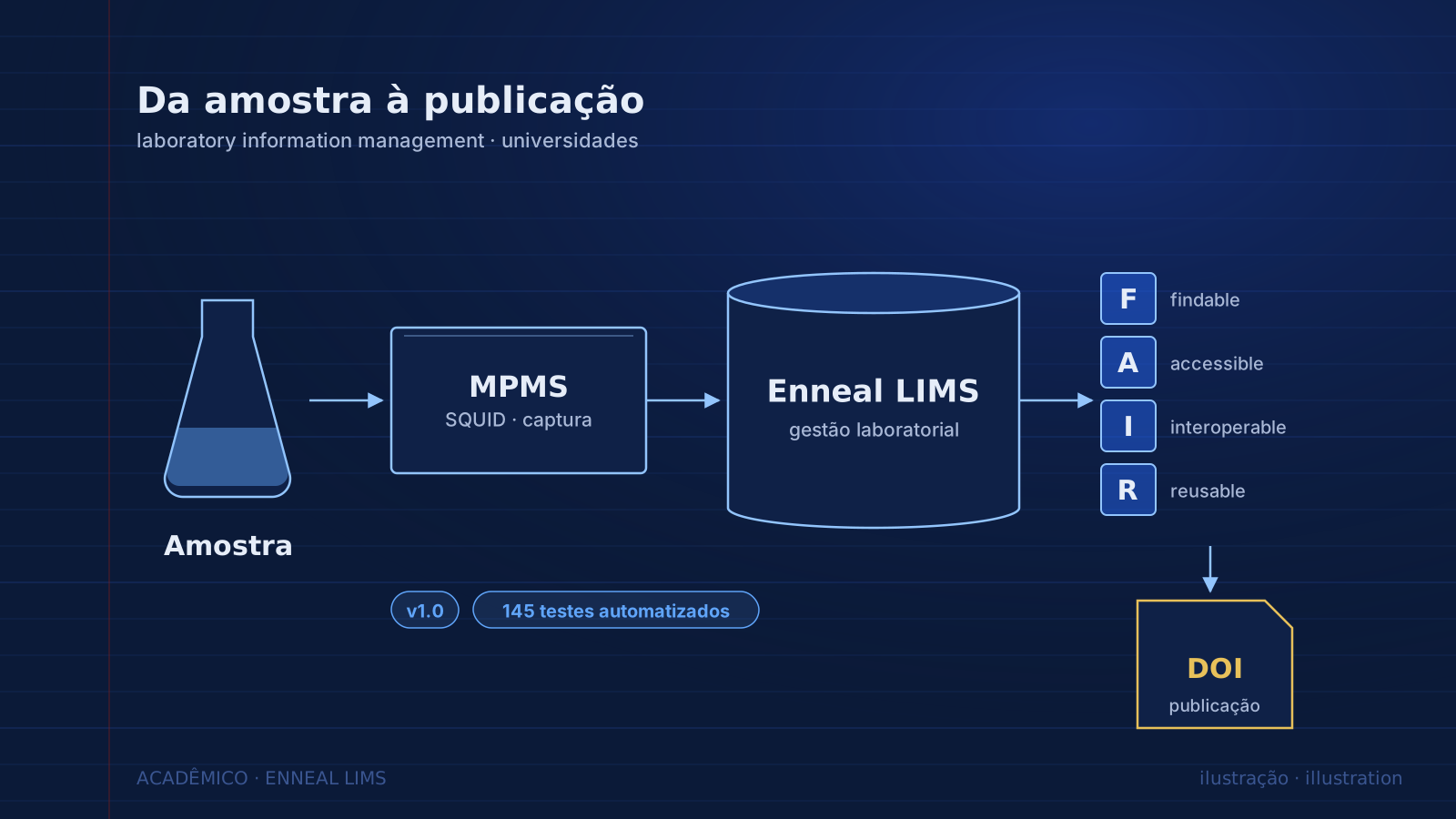
Laboratory information management for universities, born from my own need to control and organize my lab samples: from sample to publication, with FAIR/DOI and MPMS/SQUID capture. Version 1.0, 145 automated tests.
Born from my own samples
Enneal LIMS was born from my own need to control and organize my lab samples. LIMS stands for laboratory information management system, and this one is built for universities.
It’s one of the five Enneal products launched in 2026. Here I look at it from the academic side: what it does for researchers.
From sample to publication
The core idea is to follow the data from sample to publication, with FAIR and DOI:
- Sample: the record starts there.
- Measurement: data captured from MPMS/SQUID.
- FAIR data: findable, accessible, interoperable and reusable.
- Publication: the path to it, with a DOI.
MPMS/SQUID capture
The LIMS does MPMS/SQUID data capture. The SQUID is one of the instruments I work with in my solid-state physics research, so this is a piece I know from both sides: the bench and the code.
For universities
Free plan
Up to 4 users free forever, per institution, with up to 2 labs.
Product details, plans and sales contact are on the Enneal website.
Tech sheet
- .NET Framework 4.8
- ASP.NET MVC 5
- Entity Framework 6
- ASP.NET Identity
- SQL Server
- IIS
- Version
- v1.0
- Tests
- 145 automated tests
- For
- Universities and research labs
- Traceability
- From sample to publication, with FAIR/DOI
- Capture
- MPMS/SQUID
- Free plan
- Up to 4 users per institution, with up to 2 labs